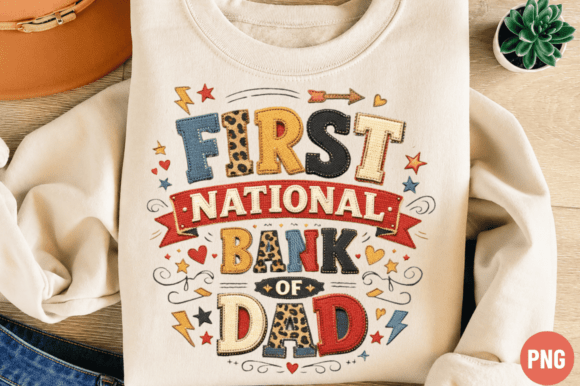
First National Bank of Dad PNG: A Guide to Quality Sublimation and Smart Design Choices
The concept of the "First National Bank of Dad" is a timeless piece of humor that resonates with families across generations. It captures that universal experience of borrowing money from parents, complete with informal interest rates and flexible repayment terms. For creators, designers, and small business owners, leveraging this nostalgic theme through high-quality digital assets like the First National Bank of Dad PNG offers a unique opportunity to connect with customers on an emotional level. However, simply having access to a funny graphic is not enough. The difference between a best-selling product and a returned item often lies in the technical execution and the quality of the source file.
Many beginners rush into sublimation printing or print-on-demand ventures without fully understanding the nuances of digital file preparation. This oversight can lead to wasted materials, poor print quality, and frustrated customers. By understanding what makes a design file truly ready for production, you can avoid common pitfalls and ensure your final products look professional and polished.
Understanding the Value of High-Resolution Transparent Backgrounds
One of the most critical aspects of any sublimation design is the background. When you download a First National Bank of Dad PNG, it must come with a transparent background. This is not merely a convenience; it is a necessity for versatile application. A transparent background allows the design to blend seamlessly onto various colored substrates, whether you are printing on a white ceramic mug, a black t-shirt, or a pastel tote bag.
A common mistake among novice crafters is using JPEG files or PNGs with white backgrounds. When these are printed, the white box surrounding the design becomes part of the final image. On a dark-colored shirt, this looks unprofessional and clearly signals a lack of attention to detail. In sublimation, where the ink turns into gas and bonds with the polymer coating of the item, any unwanted white space will remain visible if not properly removed. Ensuring your file has a true transparent background saves you hours of editing time in software like Photoshop or Canva and guarantees a clean, crisp edge around your text and graphics.
Compatibility and Software Misconceptions
Another area where confusion often arises is software compatibility. Many creators assume that because a file is a PNG, it will work perfectly in every program without adjustment. While it is true that PNG files are widely supported by platforms such as Cricut Design Space, Silhouette Studio, and Adobe Creative Cloud, the way these programs handle layers and resolution can vary significantly.
For instance, when importing a First National Bank of Dad PNG into Cricut Design Space for sticker making or iron-on transfers, users sometimes forget to check the image complexity. High-resolution files are excellent for detail, but if the design includes intricate elements, ensuring the cut lines are accurate is vital. Similarly, in Silhouette Studio, checking the DPI settings before sending the job to the printer ensures that the output matches the screen preview. Ignoring these settings can result in pixelated edges or blurry text, which detracts from the humorous impact of the design.
To avoid these issues, always verify the dimensions of your PNG before starting your project. If you are designing for a large item like a pillow or wall art, ensure the original file resolution is high enough to scale up without losing clarity. A good rule of thumb is to aim for at least 300 DPI at the intended print size. If the file is smaller, consider using vector-based tools to trace and enlarge the design, although starting with a high-quality raster PNG is usually the most efficient path for sublimation.
Color Accuracy and Monitor Calibration
Digital designs often look vibrant and sharp on computer screens, but the transition to physical products can be surprising. One of the most overlooked details in sublimation printing is color variance. Monitors emit light, while printed materials reflect it. This fundamental difference means that the bright, neon colors you see on your screen may appear slightly muted or shifted when transferred onto a mug or t-shirt.
When using a First National Bank of Dad PNG, it is essential to manage expectations regarding color fidelity. Factors such as the type of sublimation paper, the heat press temperature, and the duration of the press all influence the final outcome. Additionally, the base color of the product plays a significant role. A design printed on a bright white polyester shirt will look vastly different than the same design on a heather gray or navy blue item.
To mitigate disappointment, always perform a test print on a scrap piece of material similar to your final product. This small step allows you to adjust heat settings and time to achieve the desired vibrancy. It also helps you identify if the design needs any pre-adjustment in brightness or contrast within your editing software. Remember, no two printers or presses are identical, so what works for one creator may need tweaking for another.
Choosing the Right Products for Your Design
The versatility of a well-designed PNG extends beyond just t-shirts. The First National Bank of Dad PNG is ideal for a wide range of merchandise, including tumblers, phone cases, greeting cards, and even home decor items like pillows. However, not all products are created equal. Sublimation only works on items with a polymer coating or high polyester content. Trying to sublimate onto 100% cotton or untreated ceramic will result in a faded, washable image that disappears after the first cleaning.
Before purchasing blanks for your inventory, verify that they are sublimation-ready. Look for suppliers who explicitly state that their products are coated for sublimation printing. For apparel, aim for fabrics with at least 65% polyester content to ensure the ink bonds effectively. For hard goods like mugs and tumblers, ensure the coating is smooth and free of defects. Using incompatible materials is a costly mistake that can ruin both your supplies and your reputation.
Legal and Ethical Considerations for Digital Downloads
Finally, it is crucial to understand the licensing terms associated with your digital download. Most creative marketplaces offer files for personal use or small commercial use, but restrictions vary. Always read the license agreement included with your First National Bank of Dad PNG. Typically, you are allowed to use the design on physical products you sell, but you cannot resell the digital file itself or claim it as your own original artwork.
Respecting intellectual property rights protects your business from legal issues and supports the community of designers who create these resources. By adhering to the terms of use, you contribute to a sustainable ecosystem where creators are compensated for their work, allowing them to continue producing high-quality assets for everyone to enjoy.
In conclusion, success with sublimation and print-on-demand projects relies on more than just a catchy phrase. It requires attention to technical details, an understanding of material limitations, and a commitment to quality. By choosing high-resolution files with transparent backgrounds, testing your equipment, and selecting appropriate products, you can transform a simple digital download into a cherished keepsake. The First National Bank of Dad PNG is more than just a joke; it is a tool for connection, and handling it with care ensures that your creations bring smiles rather than frustration.