Beach is My Happy Place Summer PNG: A Guide to Professional Digital Downloads
Summer designs carry a specific weight in the creative world. They are not just about bright colors and sandy tones; they represent a mood, a season of relaxation, and a high-demand niche for print-on-demand entrepreneurs and DIY enthusiasts alike. When you choose a Beach is My Happy Place Summer PNG, you are selecting more than just an image. You are choosing the foundation of your next product, whether that is a custom t-shirt, a ceramic mug, or a personalized planner. However, the difference between a amateur-looking final product and a professional-grade item often comes down to the technical quality of the source file and how well you understand its application.
Many creators rush into downloading free or low-quality graphics, only to find their prints look pixelated or their backgrounds do not blend correctly. This guide aims to correct those common misconceptions and help you maximize the value of premium digital assets. By understanding what makes a design file truly usable, you can save time, reduce waste, and elevate the perceived value of your creations.
Understanding the Value of High-Resolution Transparency
The most critical aspect of any digital design intended for physical products is resolution. A common mistake among beginners is assuming that an image looking clear on a computer screen will translate perfectly to fabric or paper. This is rarely the case. Screen resolution typically sits at 72 DPI (dots per inch), while professional printing requires a minimum of 300 DPI. If you attempt to print a low-resolution file, the result will be blurry, jagged, and unprofessional.
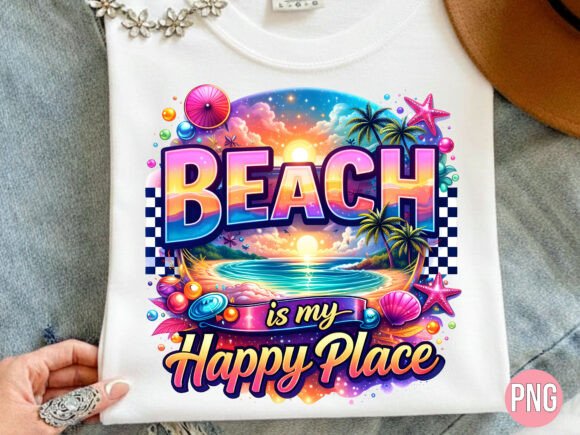
The Beach is My Happy Place Summer PNG included in this listing is crafted at 300 DPI. This ensures that every curve of the lettering and every grain of the simulated sand remains crisp and sharp, regardless of the size you choose to print. Furthermore, the transparent background is not just a convenience; it is a necessity for versatile design. Without transparency, you are forced to manually remove white boxes around your design, a process that often leaves behind ugly halos or jagged edges. A true transparent PNG allows you to place the design seamlessly over dark shirts, colorful mugs, or textured paper without any additional editing hassle.
Common Pitfalls in Digital Design Usage
Even with a high-quality file, errors in handling can compromise your final output. Here are the most frequent issues creators face and how to avoid them.
Misunderstanding File Formats
One of the most overlooked details is the difference between PNG, JPG, and SVG formats. JPGs do not support transparency and compress image data, which can introduce artifacts. SVGs are vector-based and excellent for cutting machines but may not render complex textures or gradients as accurately as a high-resolution raster image for certain printing methods. For sublimation, direct-to-garment printing, or standard inkjet printing, a PNG is often the superior choice because it balances quality with compatibility. Ensure you are using the PNG file for print applications where color fidelity and transparency are paramount.
Ignoring Color Profiles
Digital screens use RGB (Red, Green, Blue) color models, while most printers use CMYK (Cyan, Magenta, Yellow, Key/Black). While you cannot change a PNG’s color profile easily without specialized software, being aware of this distinction helps manage expectations. Bright neon blues on your screen may print slightly duller on fabric. To mitigate this, always order a test print before launching a full batch of products. This small step prevents costly mistakes and ensures customer satisfaction.
Overlooking Licensing and Usage Rights
Not all digital downloads are created equal regarding usage rights. Some files are for personal use only, meaning you cannot sell products made with them. Others allow commercial use but restrict the number of sales. It is vital to read the license terms associated with your Beach is My Happy Place Summer PNG. Using a file incorrectly can lead to copyright strikes or account suspensions on platforms like Etsy or Amazon Merch. Always verify that your purchase includes the necessary commercial rights for your intended business model.
Maximizing Your Creative Workflow
To get the most out of your digital download, adopt a structured workflow. Start by organizing your files immediately after extraction. Keep your original ZIP folder as a backup. Unzip the folder to access the high-resolution PNG. Before importing it into your design software, check the dimensions. If you need to resize the image, always scale down rather than up. Scaling up a raster image reduces quality, while scaling down maintains sharpness.
When applying the design to mockups or actual products, consider the context. The phrase "Beach is My Happy Place" evokes relaxation and warmth. Pair it with complementary colors like soft aquas, sandy beiges, or coral pinks. Avoid clashing neon colors that might distract from the message. For apparel, remember that dark fabrics require different printing techniques than light ones. If you are using heat transfer vinyl, you may need to trace the PNG in your cutting software, but for direct printing, the PNG works straight out of the folder.
Versatility Across Products
The beauty of a well-designed PNG lies in its adaptability. This particular design is not limited to t-shirts. Consider these applications to diversify your product line:
- Home Décor: Print the design on throw pillows or canvas wall art to bring a coastal vibe into living spaces.
- Accessories: Use it on tote bags, beach towels, or even laptop skins for a personalized touch.
- Paper Goods: Incorporate the graphic into greeting cards, scrapbook pages, or planner stickers. The high resolution ensures text remains readable even at smaller sizes.
- Drinkware: Sublimation on tumblers and mugs is a popular choice. The transparent background allows the design to wrap smoothly around curved surfaces without visible borders.
By expanding beyond basic apparel, you tap into different market segments. A customer buying a mug may have different motivations than one buying a t-shirt, yet both are drawn to the same emotional connection the design provides.
Final Checks Before You Create
Before you commit to a large production run or publish a new listing, perform a final quality check. Zoom in to 100% on your design software to inspect the edges of the text. Are they smooth? Is there any pixelation? Check the contrast against your chosen background color. If the design is white or light-colored, ensure it stands out against dark backgrounds, or consider adding a subtle outline if necessary for visibility.
Additionally, test the file on your specific printer or send a sample to your print provider. Different materials absorb ink differently. Cotton t-shirts may produce a softer look compared to polyester blends used in sublimation. Understanding these nuances allows you to advise your customers better and set accurate expectations.
Investing in a premium-quality digital design file like this Beach is My Happy Place Summer PNG is a smart move for any creator. It eliminates the guesswork of resolution and transparency, allowing you to focus on marketing and customer service. By avoiding common technical pitfalls and leveraging the versatility of the file, you can create professional, eye-catching products that resonate with your audience. Remember, quality inputs lead to quality outputs. Take the time to understand your tools, respect the technical requirements of printing, and let your creativity flourish without the frustration of poor-quality assets.